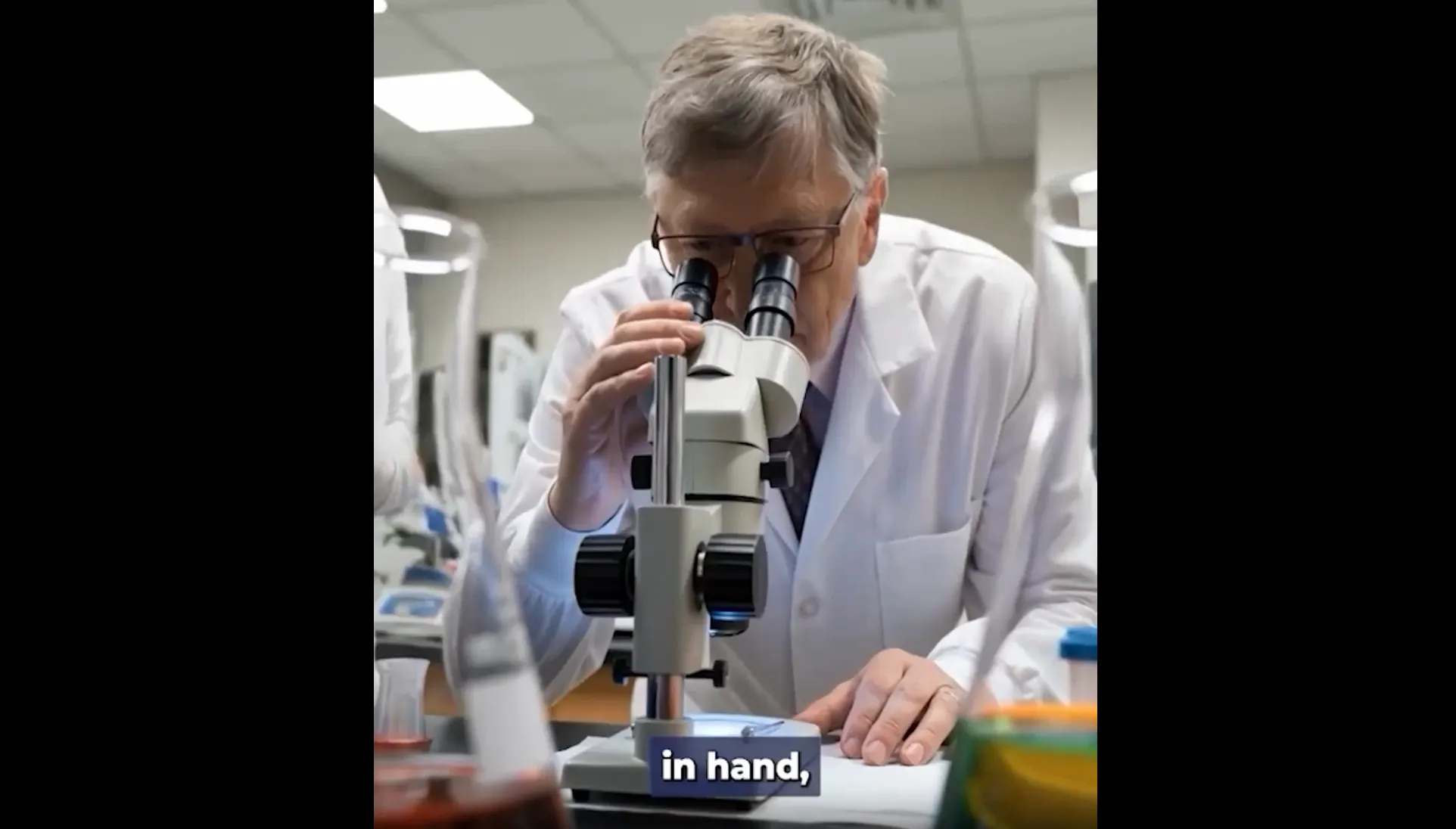
Anyone who has watched a family member follow every doctor's recommendation — the medications, the cognitive exercises, the specialist appointments — and still decline week after week knows a particular kind of quiet despair. After losing his own father to cognitive decline, Gates refused to accept that this was the best medicine could offer.
What his independently assembled research team discovered — after spending months living among the population of a remote Greek island where rates of cognitive decline are remarkably low even among those over 90 — points to a process that, according to their findings, no standard memory loss treatment has ever been designed to address. They called it the Brain Blackout mechanism: a progressive shutdown of neural energy that begins silently, decades before the first forgotten name.
Someone you love follows every prescription — and you still watch them slip further away
Their doctor calls it normal aging, but the pattern feels like something else entirely
The forgetting follows a consistent path: names first, then faces, then familiar places
You have quietly started researching what comes next — and dreading the answer
Gates' research team suggests the problem may not be effort or compliance — but whether the underlying cause was ever part of the equation at all. What Brown University researchers confirmed in the lab, and what Gates' scientists found replicated naturally on the island of Ikaria, points to two specific factors working simultaneously inside the brain.
What Gates' Team Found in Ikaria
After his father's death, Gates assembled an independent team of neuroscientists — researchers with no ties to pharmaceutical funding — and sent them to Ikaria, Greece: an island where men and women in their 90s still fish, cook from memory, and walk miles uphill. An island with one of the lowest rates of cognitive decline ever recorded. The mission was to find out why.
On Ikaria, the research team found something that stopped them cold. The local population had consumed a specific combination of wild mountain honey and natural compounds — a traditional ancient cinnamon and honey recipe — every day for generations. When analyzed in the lab, the honey contained concentrations of a rare compound called anthocyanins at levels 40 times higher than anything previously documented. According to the research team, researchers found that those anthocyanins may interact with the cadmium buildup their team had been tracking.
According to Gates' team, neither of these two processes has ever been targeted by conventional Alzheimer's treatments — which they believe may explain why millions of patients continue to decline even while following every recommendation. The full protocol, and what Gates' independent research team documented across 2,000 volunteers, is explained in the presentation below.
Free · Independent research · No sign-up required
What Families Are Saying After Watching
"My mother sat through the entire presentation without moving. Afterward she said it was the first time anyone had ever explained what was actually happening inside her brain — not just the symptoms, but the real reason."
"I've been terrified about my own memory for two years. I never said it out loud because I didn't want to scare my kids. When the cadmium research came on screen, everything I'd been noticing suddenly made sense."
*Individual experiences shared with our editorial team. Results are not guaranteed and may vary. Not a substitute for medical advice.
From the Gates Foundation Research Program
He Couldn't Remember His Own Address After 35 Years in the Same House. His Daughter Was Already Pricing Care Facilities.
Adam spent decades behind the wheel of an 18-wheeler, navigating routes across 40 states from memory. He knew every truck stop, every shortcut, every mile marker between Phoenix and the Texas border. Then one morning he stood at the end of his own driveway and could not remember the name of the street he had lived on for 35 years.
His daughter Karen had already started making calls. Not to doctors — to care facilities. She had watched her father go from forgetting appointments to forgetting faces, and she had quietly accepted what she believed was inevitable. What she had not accepted was giving up without trying one more thing.
That is when Karen came across the Gates Foundation research on the Brain Blackout mechanism — and one question she had never heard before:
"What if his brain isn't losing memories — what if it simply lost the power to reach them?"
She went quiet. Because that described exactly what she had been watching for two years. Not a man losing his mind — a man whose mind was going dark, floor by floor, the way a building shuts off lights to save what little power it has left. The Gates research pointed directly to cadmium accumulating silently in his neurons — and to the ancient cinnamon and honey recipe that the people of Ikaria had used for generations on an island where memory loss rates are remarkably low even past the age of 90.
Adam began following the protocol documented by the Gates research team. Six months later, Karen noticed her father talking about stories from the road — names of people, places he had not mentioned in years. She had gone from researching care facilities to something she had not expected to feel again.
Free · No sign-up required